The low-hanging fruit lesson I didn’t expect to learn on a Tuesday evening walk.
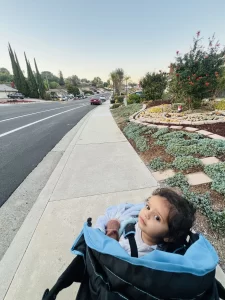
It was around 5:30 PM when I signed off for the day. My husband had just walked in with our boys, Adam and Abraham, after dropping off our daughter Sophia at gymnastics. The weather was warm, the kind that invites movement and fresh air. So, like we’ve been doing lately, I said, “Let’s go for a walk.”
My house sits on a corner, and we have a little loop we do—just enough to get the wiggles out before dinner and bedtime. The baby got excited and chanted “bye-bye, bye-bye!” as Adam threw on his colorful Crocs.
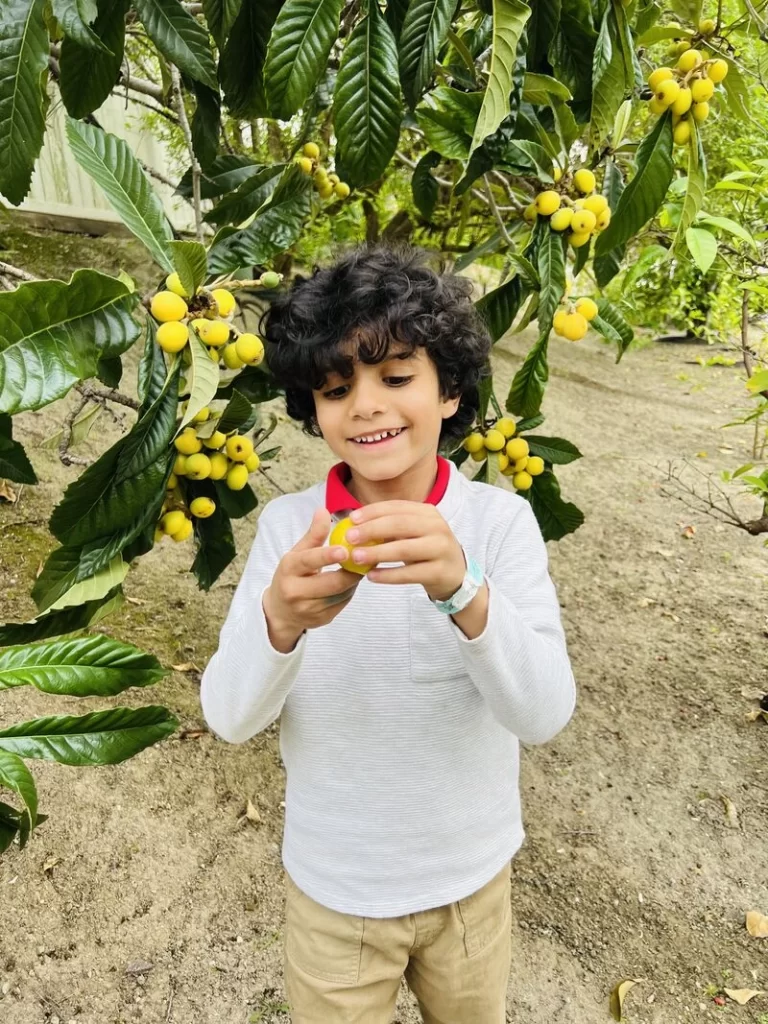
As we passed some trees on our property, Adam spotted the loquat tree. He loves the fruit, so he started climbing up a small hill to reach it. I stayed behind with the baby, holding his hand on the uneven ground. Then I heard it:
“Mom! Help me!”
Adam was reaching—stretching—for a fruit high up in the tree, frustrated that he couldn’t get it. I looked closer and saw the irony: there were ripe, golden loquats hanging right in front of him. Closer, easier to grab.
So I said, “Adam, why are you trying to reach for the really far ones? Look at all the low-hanging fruit.”
He paused. Then climbed down, picked the closer fruit, and began to eat.
That moment hit me harder than I expected. “Low-hanging fruit.” We use this phrase all the time in leadership, strategy, and productivity. But what about life? Why do we—like Adam—sometimes ignore what’s within reach?
Is it a belief that reward only comes from struggle? That success is only valid if it’s hard-earned?
This took me back to a podcast I half-finished yesterday—a conversation between Adam Grant and Daniel Gilbert (author of Stumbling on Happiness). Gilbert’s research shows that humans are notoriously bad at predicting what will make us happy. One reason? We imagine the future as still images, not videos. We visualize a moment of success or failure, but we forget how adaptable we actually are.
So maybe we overlook the simple joys right in front of us because our minds are busy chasing a more “dramatic” idea of happiness. Something uphill. Something that proves something.
But what if peace, joy, and even success are actually closer than we think?
This isn’t a polished insight—it’s still forming. But it’s a moment that made me stop and wonder. Is the pursuit of the high fruit sometimes just a distraction from the abundance right in front of us?
Curious what this sparks for you.
Warmly,
Sarah AJ